

On The Blog
Moving Into the Next Gardening and Farming Season
Hasn’t this autumn weather been just wonderful? I have lived here my whole life and fall is one of my favorite times of the year. One never really knows what sort of color we will see spread over the fields and forests. We know the Maples, Tamarack, and Burning Bushes will be spectacular, but, it turns out there is more. Much, much more. One only need slow down and look.
We are running our Autumn Photo Contest and I hope many of you will participate. After all, America is a big place and a photo from anywhere you have been this season is the one we want to see! The more color, the better. There is more information about the contest over on our Home Page.
For the last two weeks the grandkids and I have been picking up tools and putting things away. We have been gathering the filberts from the orchard and found that a family of Blue Jays are trying to harvest these nuts as well! Who knew?? I am still getting most of the fruit and the process is very much like a treasure hunt. As I shake the long slender branches I am reminded that this area needs a good pruning. As soon as everything goes dormant we will proceed with this task. I wonder…will this be the year I finally make that amazing chocolate /filbert biscotti recipe? Maybe. We will soon be harvesting the black walnuts. And those gems, they belong in two places: in the silky caramel of cinnamon rolls and in chocolate fudge. So worth the wait and effort to harvest and cure.
Beyond these efforts we have decided to expand the hen pen this fall in preparation for spring when we plan to include some ducks. Ducks are cute and fun, and their eggs are deliciously rich. And….ducks are really, really messy which is why we are waiting until spring. The new hen pen expansion will encompass the part of the barnyard most in need of cultivation, fertilization, and weed control. Hens are great at cleaning up problem ground and by early summer the space will be ready for a “pond”. And by pond I mean a rock lined swale with really, really slow drainage. We have plenty of water to refresh the small pond everyday to keep our ducks healthy. This will be a new adventure for the grandkids as well.
This is also the time of year that we pull together manure from the barn and corral, and from corners of the field and chicken house. It all gets dumped into one big pile where it cooks all winter. Literally……somewhere in late winter when the frost comes out of the compost we use the backhoe to re pile the mixture and the steam just rolls off of it into the cool air. This steam is a wonderful sign of success. The grandkids don’t understand the wonderful workings of compost yet, but they will. This is us being good stewards of all God has blessed us with and making it all work together to give us better crops with better nutrition.
So, for the next few days we will enjoy putting the beds to bed, chopping leaves for the the compost pile and orchard floor. We will go for walks in the forest to find beautiful dogwood twigs heavy with burgundy red color to marry into autumn bouquets of dried grasses, dried strawflower and marigold, dried roses and even some golden fern to finish. We have wreaths to finish and pumpkins to display. What a wonderful time of year! What will you do with your time this season? Happy Autumn!
Successes of the Season and Some Disappointments
Quite a lot has happened since July. We endured weeks of fires driven by the same heat and wind that kept my garden and orchard struggling to stay hydrated. We were successful with getting the irrigation system in so the later part of summer saw zucchini, green beans, potatoes, garlic, dill, and strawberries produce well. However, the corn failed to germinate. I used a new seed source, unfortunately. I had used seed from this company before and had no problem. But some of the seed I used this year was from 2025. All of the seed was kept dry, cool, and in a dark box. It should not have gone bad over the winter. When the corn, two varieties, failed to germinate in the soil, I did the wet paper towel test on another packet - same seed, same year, 2025. Out of about 50 seeds only 6 fully germinated. This was truly disappointing.
None of my cucumbers from the same seed company germinated but I did have better luck with the squashes and zucchini. The dill produced very well as did the nasturtiums.
I found out that deer love nasturtiums. I also found out that nasturtiums can tolerate a severe trimming and come back even more beautiful. Like many other gardeners this year, I lost my entire cherry crop to the birds. This problem is easily remedied so I will be ready next season. There are still plums and some small apples and crab apples to harvest. But the lack of water did impact the orchard. My Filbert nut trees and black walnut produced well this year but the English walnuts have not come back yet from the -25 degree winter we had a couple years back. They will recover, I am confident.
Brooda the broody hen hatched only one chick in two tries with 12 eggs. It had nothing to do with her. It had everything to do with a rooster . The eggs simply were not fertile. We lost the chick but do not know why. It happens sometimes.
As a farmer I always hope I have provided everything the soil needs for full production, providing food for my family and to give the excess to the food bank. But every once in a while something happens to suspend that progress. And this time it had nothing to do with the soil and everything to do with arthritis.
About three years ago I began to notice that I could not get on the riding lawn mower to trim the orchard as easily as in the past. Getting into and out of the work truck was painful and my hip began to get very weak. The real test of joint failure occurred when I was in Israel and had the opportunity to go for a ride on a camel. Once you are up there there is no coming down until the camel keeper has made sure we reached our destination, a smoke filled Bedouin tent with a fire in the center upon which coffee beans were roasting. The smell almost made me forget my aching hip……and the coffee was amazing! I came home from that trip knowing I had to do something about this hip before I crippled myself. This was the year.
The surgery was supposed to be in July but was postponed until August. This meant that I lost the entire final month of summer when the succession plantings should have been tended to. It is three days before the autumnal equinox as I write this and the night time temperatures have begin to dip into the mid 40s. Nothing except the various salad greens will grow now, so, the garden is effectively done. I am a little sad about this.
On the other hand, I did get some lovely Albion strawberries, a beautiful rose bed, and some thriving lilac shrubs. These wins will have to do. Like all other farmer/gardeners, with the end of the garden season comes the unfettered dreams of next year. It is, after all, only 8 months away…seven if I add the garden starts in April. And there will be garden starts in April….absolutely no sooner. Really. I mean it this time. No starting tomatoes in March…….no matter how I am plagued by spring fever.
I hope your yard, garden and farm season was productive and you found peace and contentment from life’s challenges among the flowers, trees, vegetable beds and along the creek side as I did. Now that my hip is on the mend there is garden planning to do. And I still hold out great hope for Fairy Garden next year. We will see.
Catching Up From a Very Busy Spring and Into a Hot Summer
This year has been so busy for me. Most of it was planned so there were very few surprises. Still, I found myself guilty of the very thing I encourage farmers and gardeners to not do: try to cram a whole lot of life into a very small time frame, particularly, May through September. We hit the ground running in April with plants starts, a small remodel, incoming family visits and haven’t looked back. And it is only the end of July!
This is what we do here, in North Idaho.
The perception is that winters are long. Summers are short and when the daytime temperature hits 60 degrees with a few hours of continuous sun we are off like a shot. Buy some seeds! Find the hoses! Buy more seeds! Locate and dust off the lawn furniture and the lemonade pitcher. Buy the rest of the seeds, potting soil and amendments we could possibly need, because once we tie into this yard and garden thing, we are in it.
I started A LOT of plants under the grow lights in my house but had the good sense to wait until April. This sort of self control is new for me. I generally shop the seed catalogs, make all the lists and draw up the garden plans before January clears the calendar. Then, of course, there is nothing left to do but wait. Me with a cup of coffee, or 5, staring out the window waiting for spring. Everyday. This is actually where the idea of full blown retirement becomes a problem…….January. At least with a full time job I have something to do when I can’t be in the garden. Not looking forward to the retirement evantuality, really.
There are actually other things to do to prepare for spring. About 5 years ago I began keeping a weather journal. The content of these journals tell a story about weather in real time. The process forces the casual weather watcher to take in more details and note the surprises that come along. Like frost. Like the random thunder storm. One begins to ‘feel’ what the weather is going to do. Wind , air pressure, rainfall, humidity and even the dew point become important information when farming is more than a hobby, like it is for me. I actually grow food to put by for the winter. Currently I have three varieties of tomatoes in the tomato house. I freeze apples as they ripen and fall from the tree to make applesause fresh during the winter. It is so much better than canned! We turn the plums, purchased peaches and apricots into chutney for winter meat dishes to spice up meals. Potatoes, carrots, onions, garlic, and even grain on occasion are put away for winter use. I have increased the dried herbs I grow to include dill, oregano, basil, green onion, minced garlic, thyme, chives, marjoram, tarragon and savory. What a diference in taste when I grow, harvest, and dry my own herbs! So, watching the weather matters. Some of the herbs, like basil, and vegetables like green beans, summer squash and tomatoes have to be protected from frost. Keeping track of weather conditions just makes sense.
On a larger scale, weather plays a part in tending the meadows for proper forage, soil protection and even carbon sequestration. I don’t plow my meadows anymore. I wait for the autumn rains to help the left over dried grasses lay down and dampen before I disk, lightly chopping the organic matter into the soil. Then I seed back drought resistant forage grasses and harrow it in, one pass only, to make sure the little furrows that hold the seed and water succeed. I do lose some carbon, but if the seed bed is good and strong, this treatment need not be done yearly. Although this is my normal plan, the autumn rains do not always come in late September through October as they once did. In 2025 I finished the meadows the day before Thanksgiving. It was a very dry autumn. In addition, our first frost which used to occur in late September sometimes does not come until late October. Sometimes, not at all.
It is impossible to farm and keep livestock without enough water. One horse can work through 250 gallons of fresh water in no time and believe me, you want them to. 50 chickens go through 20 gallons of fresh water every 2-3 days in the winter and far faster in the summer. When it is hot the hens have both indoor and outdoor water available. Here again, weather matters. Livestock must be cared for. The garden itself has to have about 30 minutes of consistent watering everyday to make sure plants are healthy and strong. I do most of that watering first thing in the morning or close to sunset in the evening. Waiting for rain in the summer months is challenging, but, wind is worse.
It is the end of July. We have been close to 90 degrees for weeks, it seems, with very little rainfall and there is no serious rainfall in the forecast into August. While this weather can be challenging, it is a great time to succession plant. If you haven’t already done it, a second round of peas, green beans, and carrots can go in the ground. You can also put left over sprouting potatoes in and by October, at the very least, you will have “new” potatoes which are delicious! You can plant all the greens and even beets if you want but the roots may not have eneough time to mature. Still, beet tops are amazingly nutricious and don’t mind cold temperatures.
Well, that is the catch up overview for now. One unusual thing is our broody White Leghorn. She just is not letting go of it. So, my grand daughter asked if we could let “Brooda”, her name for the hen, set on some eggs. Generally this is done in the spring to make sure any new chicks are big enough to be in the big house by winter. If Brooda succeeds, there will be 8 new chicks to merge into the flock by mid December. We will see how this shakes out.
Gardening When It is Too Cold to Garden
Well, that last bit didn’t go as planned. I had originally intended to have the grandsons help me plant some microgreens for both their family and us Grandparents to enjoy. But between stuffy noses, a house remodel, colliding schedules and a new grandbaby coming, I just could not find a block of time to wedge this plan into place. It will have to wait.
In the mean time, I will look to the brooder turned green house.
Many years ago my Dad built a small room in the barn on our farm property specifically designed to house baby chicks for the first 4 months of their life. Over the years we have raised several batches of chicks and it worked very well. It turns out that the 8’ x 8’ room is also a fantastic place to start plants in the spring. Dad had installed plenty of electric outlets in a variety of locations as well as south facing windows which can pop open when needed for ventilation. The room also serves as winter storage, so, it’s a busy place.
Over the winter I have watched dozens of videos presented by gardeners in several gardening zones throughout the United States. One homesteader even had bananas in his lovely San Diego garden. That won’t work here, of course, but wouldn’t it be fun? The very idea sort of sparks the imagination - what could I try to grow that might be little different? What have I not tried, and, why not?
For the last two years I have been working on my Whimsy Garden. It is a large 20’ x 108’ area and probably the most planned out space I have ever worked with on the farm for one simple reason: my grand kids. We have an orchard near the Whimsy Garden. A playhouse is at one end and the swing/play set is at the other end. In the middle is a small, shady space where the grand kids and I sit in the cool of the summer days to read books. For the first year we enjoyed reading while listening to the solar fountains in the whimsy garden just a few feet away. Eventually this connection turned into reading in the garden with bare feet in an old washtub of cool water near the green bean trellis with birds eating from feeders nearby. Then came the grassy paths through the garden winding amid vine covered hoops and solar lanterns adding a whole new element to the space as evening fell. The most recent addition was the fairy garden. This joyful space has been a work in progress for sure. I love opening the gate, including the hidden gate the grandkids found last year, and watching them run free from one end to the other. They can’t hurt themselves, and they have learned to respect the growing spaces. It is wonderful.
So, back to the idea of gardening when it is too cold and the idea of trying something new.
In March quite a few plants can be started in the brooder/greenhouse, and should be, in order to go out to the garden at the right time. This week I bought the potting mix I use instead of seed starting mix. Not everyone likes this option but it has worked well for me over the years. I got all of the seeds sorted and placed the order to Burpees for seed I cannot get locally. Other odd seeds came from Baker Creek. I also order my strawberry plants from Burpee because we rarely have any left over from the CO-OP Sale. This weekend I will start the 5 varieties of tomato, the sweet peppers, and egg plant just for fun. I have never had egg plant grow big enough fruit to use, but they are pretty in the garden.
The seeds will be started in my office at home including some seeds started by the grand kids. As soon as they germinate and pop out of the ground they will go under the grow lights and the fertilizer rotation will begin. When they are about 4” tall, they will go to the greenhouse and remain under lights with a fan going in the room, and they will be on a timer for light control. Then, we wait.
New dream plants for my garden this year includes Loofa, Tri Colored Corn, a yellow tomato, rutabagas, and leeks. And I already have a patch of soft wheat in the works. I have grown wheat before, so, just growing for serious volume this time.
The whimsy garden itself will be full of carrots, cucumbers, mixed greens, summer squash, beautiful flowers and herbs which will keep the kids picking, munching, reading, and exploring for another season. I look forward to it and embrace every moment. This is my dream and I hope at least some of it is realized.
What plans do you have for your special space this year?
3/6/26
It’s Time to Plant a Garden.
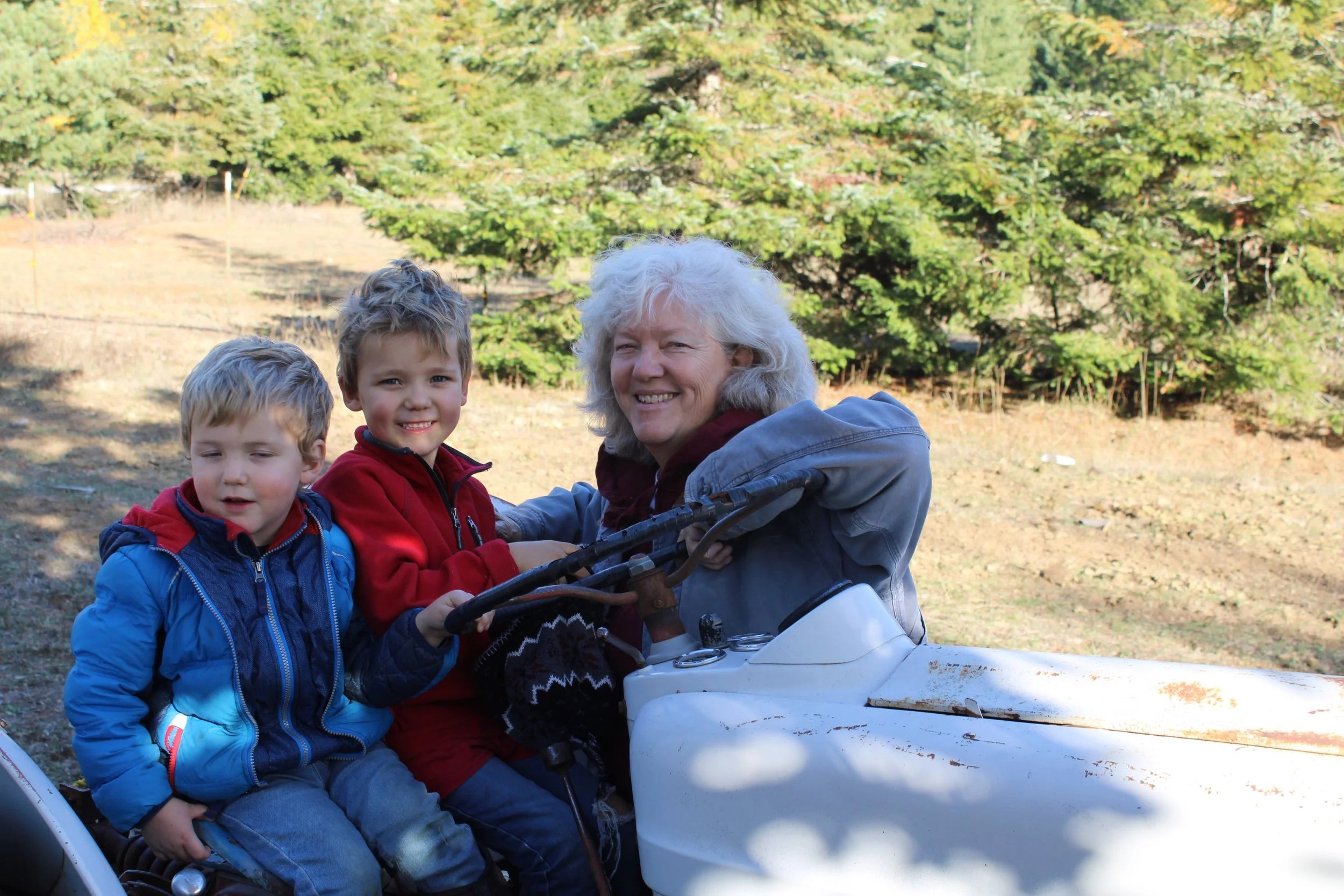
These guys aren’t going to stay young forever. Right now, they love being outside with me working around the farm, taking care of the chickens, gathering eggs, feeding the cats and so many other things. Everything we do together creates a memory. Even if they can’t recall the details in 20 years, they will remember the smell of the hay, the shavings, the early morning fog, late night fire pits, putting the chickens in and the sound of Grampa’s laughter. They will say to each other in the years to come “Remember at the farm when we used to……” even if they only experienced it for one summer, one winter, on one creek bank and in one rainstorm. That memory, that life extending moment will be forever etched in place in their memories. This is what I am after in the next phase of gardening. We are planting more than flowers and vegetables.
My vegetable /flower garden is sort of big. It is 108’ x 20’. It is big because I need it to do a lot. It has to produce enough food for two families to eat from all summer and well into January. By then the potatoes are getting a little soft and the squash needs to be finished up and frankly, everyone is bored with potato soup, “fresh” pasta sauce from the freezer over homemade noodles, and the amazing applesauce made from last fall’s frozen apples. We try to dress the meals up with fresh bread or biscuits, real butter and homemade jams and jellies. The fresh eggs continue to come from our hens and they continue to get the kitchen scraps so it is reciprocal. But, one of these days someone is going to groan “Where are the fresh greens??”
So this year we are going to dive in to the microgreen river. I bought a microgreen mix from my favorite seed company but, alas, it is filled with mustard greens and bitter herbs which I don’t like. They grow great! But, I can’t eat them and none of the rest of the family will either. So, we are going a different route: sunflower seeds, baby kale, spinach, beets, green peas, and swiss chard. I can also include a basic salad mix too. And this is where the kids come in.
Micro greens are fast growing so I will have the kids help me plant and water them. Then we will watch the progress all the way to harvest. After the harvest the kids will be able to feed the soil sponge to the chickens. They will love it! And the greens can be clipped, put in a bag and delivered to their mom as part of dinner.
I have a table and light set up in the house. Now it is just a matter of getting the soil, trays, and seed in place, and away we go. This first time through I will have the boys help me and it is going to be loud and messy. But isn’t that where memories are made? I think so.
Hopefully we will soon have pictures and report on our progress so, stay tuned.
Of Chickens and Grand Kids and Snow Blowing
December 7, 2024
For the last three weeks things have been pretty busy on the farm. Our old mare, Misty, got her new winter turn out blanket. It is lime green so we can see her anywhere. It matters because she is an escape artist and her muddy brown color blends in with every winter landscape until snow arrives. She is warm and dry, eating well and nickering for treats. So far, so good.
I did indeed get all the flowers planted and all the tools put away. The electrical problem in the hen house was an easy fix, a couple of breaker replacements and we were back in business. There is still a ceiling outlet mystery which we will deal with in the spring, but for now it is disconnected.
For the last few weeks several people have posted on the public poultry forums about keeping chickens warm in the winter. I have always run two 150 watt heat lamps in my hen house not so much for warmth, but to keep the waterers thawed. Most of the time it is not an issue, but that –20 we had last January did freeze the water, so I did need the lamps. However, I am thinking of going a different route this year for two reasons: my hens simply will not stay out of their water pans, and I am sick of cleaning them! So, this year I am moving to heated water pans only accessible by simply walking up and drinking. There will be nothing to climb on, roost on, sit on poop on, or otherwise make my job harder. I might be able to tackle this project after the weekend. Hopefully there will be photos.
In addition to waterer issues some folks have asked if the hen house needs to be heated at all. In general, I would say ‘no’ with a caveat: When and if temperatures do get down to subzero make sure your chickens are NOT roosting near any drafty areas. Their combs and feet can be frostbitten by the cold air. So many folks have said they don’t use any heat, and all the chickens are just fine. While circumstances certainly can vary, I found in my world, this is simply not true. My poor rooster lost about half of his comb last January.
After several days of no precipitation it looks like the valley is finally going to get the snow we so badly need. I did get all the debris cleaned up and made clean passage for the snow blower. I use it to make paths from the farmhouse to the shop, barn, and hen house. No, I don’t have to. There is a backhoe which can clean some of this, but it turns out snow blowing for me, is therapeutic. Who knew?!
Apart from a few random toys and possibly a water sippy cup I think I managed to clean up after the grandkid's orchard play area well. I will make another pass through before the coming snowfall arrives.
This is such a wonderful time of year for the farmer/gardener. He/she just sort of HAS to rest. Everything is under a blanket of snow. The ground is frozen. There is just not much more one can do but maintain until.....January! The month of dreaming and planning.
Happy Holidays everyone. Make it a great holiday season for yourself and by extension, for others. Be blessed.